


Debu’s Childhood (Sant Gadge Baba)
There is one village, Shengaon in Amravati district. This village is spread near Bhuleshwari river. One man by name of Zingraji lived in this village. Не was a launderer by caste. But he used to work on fields. He worked very hard and grew crops in his field. His wife’s name was Sakhubai. Sakhubai helped Zingraji in the field. When she finished housework she would go to the field to help.
23rd February 1876 was the day of Mahashivratri, A son was born to Zingraji on that day. He named him Debuji. The child’s complete name was Debuji Zingraji Janorkar.
Zingraji was pious. He had faith in God. He sacrificed goats, cocks in the name of God. He offered meat to God and also ate it himself as blessing from God. He drank alcohol believing it was God’s ‘tirtha’. This was Zingraji’s superstition. People like Zingraji believe in many Gods. Mariai, Khandoba, Viroba, Mhasoba – so many Gods. They do not understand who true God is. They do not understand the godlike qualities in human beings. They will see God in a stone if shendur is painted on it. They will pray to it and salute it.
Zingraji did the same thing. He sacrificed animals in the name of God. He drank alcohol in the name of God. He started eating meat. He became an alcoholic. He lost the capacity to tell apart between Many guests came to Zingraji’s house. They too, ate meat and drank alcohol in the name of God with Zingraji. They praised Zingraji and enjoyed the parties.
Zingraji’s debts began to mount. Moneylender’s money came into the house. The burden of debt increased. He started selling land to the moneylender. Gradually, Zingraji became a pauper. All his land was taken away by the moneylender. He had to give up his house too. Sakhubai’s jewellery was sold. Nothing was left except some black pearls around her neck.
Then Zingraji started worrying. He fell ill. Now nobody would come to him. They said, “Friend is good only if he has wealth.” Their friend had no money now. He did not have a single paisa even to buy poison. Now, Zingraji became very lonely. Only Sakhubai and his small son Debu were with him.
Zingraji’s maternal cousin came to know of his condition. He ran to his help. He took Zingraji, his wife and son to Kotegaon. But, Zingraji was sure that he would not recover from his illness. He called Sakhubai to his side. He said to her in his Varhadi language, “Sakhu I am going to die. At the time of death I had to come to someone else’s house. Even after death, someone else will have to spend for me. I lost my land, house, everything I had, to alcohol. I could not fulfill my duties towards you. Now please listen to me. Throw away all the symbols of Gods I have collected. Throw away all the stones. Do not let Debu go near these Gods and Goddesses. Let him be fearless. Please save him from these Gods. It is better that he grows up not believing in God but do not let him sacrifice animals and let him drink alcohol in the name of God.”
Saying so, Zingraji died. Sakhubai started crying. Sakhubai became a widow. Debu became an orphan. He was only 8 years old. The year was 1884.
One chapter of Sakhubai’s life was over. Debu’s difficult life started at his uncle’s house.
There is Dapure town in Murtijapur taluka. This town is spread near Purna river. This was Debu’s uncle’s town. His uncle was a very prominent person in the town. His name was Chandrabhan. Debu’s grandfather’s name was Hambirrao. When the grandfather heard that Zingraji had died, he sent his son and brought Sakhubai and Debu to his home.
Debu’s uncle had a lot of land and big fields.
He also owned cattle. The house was large and beautiful. They had good food and a lot of milk. They had status and position in the town.
Debu took the cattle for grazing. He cared for the cattle. When cattle rested in the afternoon, he too, had his meal. He took them to waterhole. When the cattle drank the water and rested, he ate his food.
His friends also used to go along with him. They too, took care of the cattle. They shared meals and enjoyed the time.
Once they decided that they would arrange a party in the woods. They decided that each would bring one preparation of food item from his home and eat together in the fields. All of them sat together to have a meal like Shrikrishna did with his shepherd friends. But the boy who was serving, put the plates
of Mahars, Chambhars and Mangs aside separately. Debut did not like it. He took his own plate and sat beside those children. He ate with them.
Other boys teased and made fun of Debu. But he was calm and quiet. He said to his friends, “Friends we are all God’s children. There no difference between us. No one is of higher caste and no one is of lower. We are all equal.”
Upbringing (Sant Gadge Baba)
Debu looked after his uncle’s cattle. He took care of the cattle. So, his uncle, aunt, and grandfather, all were very pleased with him.
Sakhubai also worked very hard in the fields. Even if this was her father’s house she felt she was a guest there. That is why she used to work very hard. She inculcated same values in Debu.
Debu’s aunt got up early at dawn. She ground the grains. Debu helped her do that. While grinding, his aunt sang songs. Her voice was very sweet. Sometimes she sang religious songs. Debu listened to these songs very attentively. He memorized them gradually. He too had a very sweet voice. He also sang songs. At night, people used to sing bhajans in the temple. Debu also went to the temple. He memorized the songs written by saints.
In the woods, he gathered his friends in the afternoon and started singing bhajans. There was no tal or mrudung. The children made tal from stones and mrugung from broken tins. Debu became an expert bhajan singer. His memorization of songs also improved.
Debu did not go to any school. He did not learn anything sitting surrounded by four walls. But he learned a lot of things in a school without walls. He learned in nature’s school. He got wise with experience. After life dealt him blows, he started thinking. He learned to differentiate between truth and lies. He had no formal education. He did not learn how to read and write. He could not even sign his name. If anybody wanted his signature, he used put the thumb impression of his left hand. This Debu became a Saint of Maharashtra later on. He became a teacher of the people.
(Sant Gadge Baba) Wager was won but…
Children used to go for a swim in Purna river in Dapure. One doesn’t have to pay anything to have a swim in the village river. There are no swimming pools. They learn to swim on their own. This is the way nature educates you. But once you learn something you remember it for life. You never forget it even if you want to.
Once, Debu also went for a swim in Purna River. He did not know how to swim. Even then he dared and jumped into the water. But he started to bob in the water. Water went into his nose and mouth. He got frightened. Two boys on the shore saw this. They jumped into the water and brought Debu out. Debu’s uncle and aunt got to know of the incident. His mother also got very frightened and came running to the riverside. Uncle was very angry. He smacked Debu. Debu kept quiet. But he decided to learn how to swim. He was determined that he would learn to swim come what may.
He learned swimming and became an expert swimmer. He could easily swim from one side of the river to the other. He also wagered with other older children. Once, one boy Ganaji from the village challenged Debu. They both got into the water and
started swimming fast. The people standing on the riverside encouraged them. But unfortunately, Ganaji got caught into the current. He went down into the water and never came up. His body was found in Kotegaon the next day. Debu won the wager but lost a comrade like Ganaji. He felt very sad. The incident left a mark on him for ever.
Compassionate (Sant Gadge Baba)
Debu had grown up now. His body was strong, well molded. He looked smart and handsome. Uncle had transferred him to work on the fields now. He prepared the field for sowing. He sowed and harvested the field now. The work was hard. He used to look after the farming. His work was very difficult and hard. His uncle did not have to worry about the fields anymore.
His uncle had one bull. He had become old. Once what happened, uncle decided to sell the bull to a butcher because he wanted to pay back a moneylender. He also had a permission from Hambirrao to sell it. Debu got to hear of this. He was angry. He asked his grandfather and uncle,
“Are you going to sell our bull?”
“Yes.”
“Why?”
“He has grown old that is why.”
Debu was furious. He said, “If our family members grow old and cannot work any more do we sell them? This bull has worked so hard. We have eaten food because of him. Should we forget all that?Nothing doing! I will not let you sell the bull.”
Hambirrao was silenced by Debu’s determination and his demeanor. Uncle decided against selling the bull. Debu won. Debu’s thinking won. Tukaram’s thinking won. Debu had memorized song written by Tukaram.
“Those who are deprived, we should call them our own’
Debu had not just memorized the songs. He also emulated his behaviour accordingly.
Marriage
Debu was fifteen complete now. He was strong and looked grown up. He was working hard in the fields. His family started talking about getting him married. Sakhubai also wanted to see her daughter-in-law. His aunt Kautikabai also wanted to marry him off. Chandrabhan uncle asked for a hand of daughter of Dhanaji Parit from Kamlapur. Dhanaji agreed to
give his daughter to Debu. But Dhanaji’s wife was not in favour of the marriage. She said, “This boy does not have his own house. He does not belong anywhere. He is working in his uncle’s field. When uncle’s son grows up what will happen to this boy? Where will he go? He will be working as a labourer. I do not want to send my daughter to such house.”
Many people tried to convince her. They told her that the boy was good. They described his nature but she was not convinced. She said, “If his uncle throws him out of his house, where will he go? Besides, I have heard that his uncle’s land is mortgaged at the moneylender’s. Who will look after my daughter?” Again, people tried to persuade her. Again people told her that the boy was good. Then finally, she agreed. Debu was married to Kuntabai in 1892.
Fighting with Hooliganism (Sant Gadge Baba)
Chandrabhan uncle had mortgaged his land and borrowed money. He had borrowed this money from a moneylender. The name of the moneylender was Banaji Nidake. This Banaji was very cunning. He cheated the uncle. He grabbed the uncle’s land. He put his own name on all the papers. But the possession of the land was with the uncle. Debu was sowing the land. The moneylender showed Chandrabhan, false accounts. He got the land mortgaged from Chandrabhan. Uncle was very upset because of this. He fell ill. Debu was trying to comfort his uncle, but to no avail. Uncle did not recover from the illness. He died. Hambirrao’s daughter-in-law became a widow. His grandson Baliram was still a small child. The responsibility of the whole family fell on Debu’s shoulders.
Debu acknowledged the situation. He pulled himself together. He consoled his heart. He decided to face the situation. Once, the moneylender brought some hoodlums. Debu was working in the field. The moneylender told him, “Debu, get out of here. This land is mine.” Debu said, “Sir, you have shown false accounts and cheated us. My uncle has paid you back. I have also paid you. I will not stop working and will not leave the field.”
The moneylender told the hooligans, “What are you waiting for? Pull this Debuji out.” When he heard this, Debuji said,
“Go back quietly. Don’t take me on if you value your life.”
The men charged on Debuji. Debuji beat them and threw them out. The hooligans were frightened when they saw Debuji’s face. They ran away. The moneylender did not cross Debuji’s path again. He never said anything about money either. After this incident, Debuji became famous. People started calling him Deosingh.
Different Path
Debu taught a lesson to the moneylender. He won the struggle against money lending practices. It was a case in point. The situation at home started improving. Everyone was working hard in the field. The income started growing. On the other hand, Debu’s family too started growing. He had four children. The girls’ names were Aloka and Kalavati and the boys’ names were Mudgal and Govind. Mudgal and Kalavati died at early age.
First daughter was born in 1899. The household was happy. Hambirrao grandfather was very happy.
He decided that there should be celebrations for naming ceremony. He decided that a goat should be killed for the feast. He also made arrangement for alcohol. When Debu heard of this, he got very angry with his grandfather. He decided that such practices should be terminated. He decided that the naming celebrations should be marked with sweets. He sent the invitations. The guests came in the hope of eating meat. It was a custom in the society of launderers that occasions like birth, death and wedding should be celebrated with meat and alcohol. But Debu’s family had suffered because of this custom. He had not forgotten his father’s death. Sakhubai supported him.
The day of the naming ceremony arrived. The girl was named Aloka. Everybody was happy and enjoying. But when people saw the food, they were very disappointed. There was no meat, no alcohol. Only sweets, vegetables, rice, dal and laddu were there. Guests looked at each other. Their expressions showed discomfort. Debu requested them,
“Please forgive me. You came here wanting to eat meet. I cannot fulfill your wish. Our society has suffered because this custom. Let us behave from now on. Let us change. Let us stop eating meat and drinking alcohol. Please do not insult the food, start cating.”
The guests sat down to eat. Something different, unexpected was happening. They could not take it in. But they ate silently, quietly whatever was served. They gave in because of Debu’s determination. Debu had taught the people humanity. He had become people’s teacher.
Attraction for the unknown (Sant Gadge Baba)
It was 1904. Debu was 28 years old. He was a father of three children. He was working in the field. He was looking after his family. He was a family man. In the evenings he went to the temple to sing bhajans.
It was the month of Margashirsha. The fields were filled with crops. Debu was in the field watching over it. He was guarding the field from the birds. It was 2 in the afternoon. He saw somebody coming from the side of Khairi village. The person was well built but his clothes were tattered. His body was gleaming. He had a long beard and moustaches. Debu saluted him and asked him,
“Sire what do you want?”
The person spoke in Hindi.
“I have everything I want. If you want something say so, or come with me.”
Debu went with the man to the riverside. He got flour, salt, chilly powder, vessel from the village. He came to the riverside. The man mixed everything and fried the mixture in oil. He gave the Prasad to Debu. Debu came home with the vessels.
In the evening both of them went to Dapure’s cemetery. They slept near the Shivling the whole night. In the morning, Debu came home. Then he went to Daryapur on business.
In the afternoon the Baba came into the village.
He enquired about whereabouts of Debudas. The people got scared. They pushed the Baba away from the village. Debuji came back from Daryapur. He heard that the Baba was looking for him. He began running looking for the Baba. He searched in the 100 odd surrounding villages, but could not find him.
After this episode, Debu changed. His style of living also changed. His nature changed. He left his family. On February 01, 1905, he left his home. He wanted to improve the whole society.
Debu left home and changed completely. He would go to any village. Stand outside any house. He would ask for broom and clean the area around house, clean the street. If anybody offered food in return he would decline. Then he would go to the woods. Bring a bundle of wood stick. Leave it at the woman’s house and then if she offered, take some food from her. He would keep the bhakri in his hand and eat it.
If he saw any women drawing water from a well, he would go there and help them draw it. He would go away after the work was finished.
If he saw the field being harvested, he would go there. He would ask for tools and help in harvesting. If anybody gave bhakri, he would eat. But, he would never ask for food. He started living and working like this. If he saw a woman carrying load with her, he would offer to carry it for her. He would take it to her house. He did not expect anything in return. He never stopped in hope of getting bhakri. He would leave immediately after finishing the work. This is how Debuji worked.
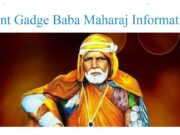
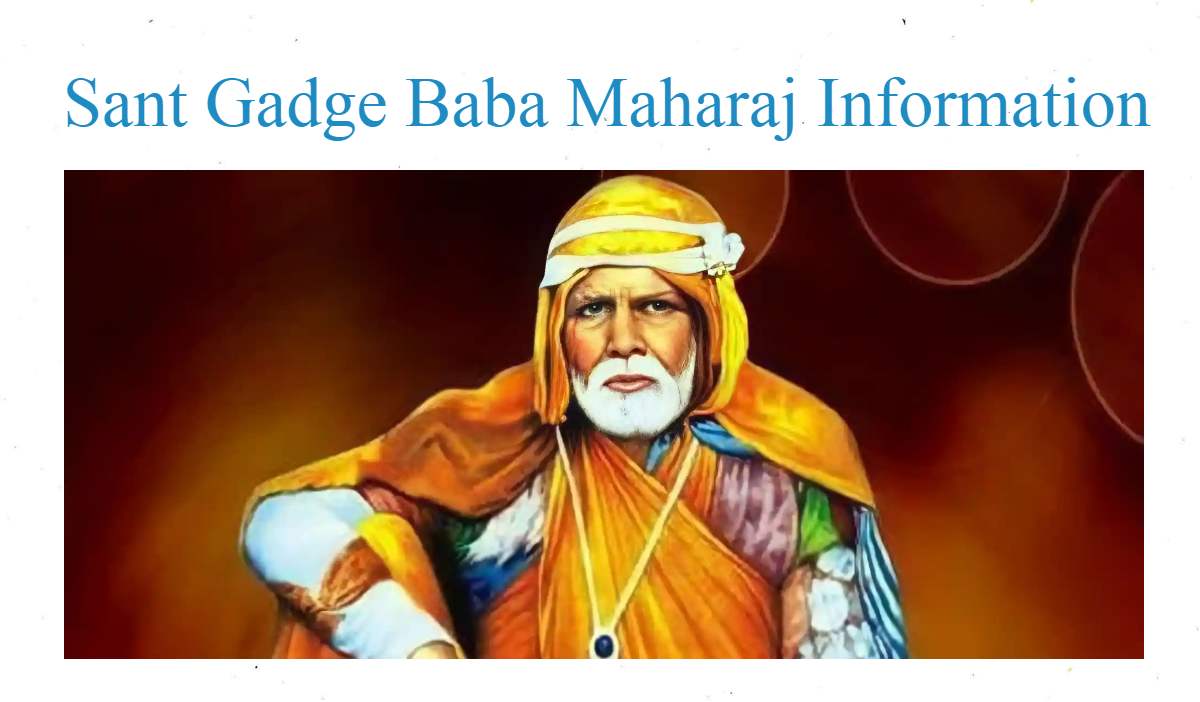
At home, Sakhubai was living with pain in her heart. She would wonder where Debu had gone and why he had left his family. She asked everyone whether they had seen Debu. But she could not find him. Debu did not come home. However, she was sure that he would come for Runmochan’s Yatra. And he did come for Runmochan’s Yatra. But his appearance had changed drastically. He had chappal on one foot and a shoe on the other. In one ear he was wearing an ear ring and in the other a broken piece of bangle. He was wearing a shirt patched in many places. He had a lungi around his waist. On his head he was wearing a piece of broken pot. He had grown a beard. People started calling him Gadgebaba because of his appearance. Debu had become Gadgebaba.
His mother was very sad when she saw his appearance. Sakhubai started crying. Debu was throwing soil where it was slippery, in Runmochan’s Yatra. Sakhubai said to him, “I have brought you some sweets. Please eat that.” Debu distributed the food to poor people. Sakhubai gave up. She said, “Debu please come home.” He said, “What do I do at home?” If he ever felt like it, he would come and stay for a few days and leave again. But then he stopped coming to home. He never came back again. He merged with the society. He became a social worker. He lived like that moving around for 12 years. This was also a meditation of a kind.
Religious Chanting (Sant Gadge Baba)
After twelve years, Baba felt that he should preach some wisdom to the society. Whatever he had experienced, felt, should be told to the society. He took the support of ‘kirtan’ for that. He had sung bhajans when he was a child. He had memorized the abhangs written by Saints. He had gained some experience now. He was sure that people would listen. Then he started performing ‘kirtans’, Wherever he went, he would
clean the area first. He would clean the surrounding area, streets and then perform ‘kirtan’ at night.
Thousands of people came to his ‘kirtan’. As it is, our society is religious and inclined towards devotion.
People would listen to his ‘kirtan’ with devotion.
People sang with him ‘Gopala, Gopala, Devakinandan Gopala’ and joined him in ‘kirtan’. Gadgebaba was not a ‘kirtankar’. But to educate the society he became ‘kirtankar’. His ‘kirtan’ was in the form of dialogues. He would ask people questions. He would make jokes. He would attack the wrong customs of society. People also listened to all his speeches laughingly. They agreed with his teachings.
He would say, “Do not drink alcohol. Do no sacrifice animals, do not borrow money, do not please God with borrowed money. True God is not in the temple. He lives in human beings. He lives in blind, spastic people. Serve these people. Give food to hungry, give water to thirsty, give help to needy, do not kill animals, do not sell cattle to butchers.”
This was the way in which Gadgebaba performed ‘kirtan’.
Baba – How many Gods are there?
Audience – One
Baba Is there Khandoba in your
village?
Audience – Yes
Baba Then how many Gods?
Audience – Two
Baba – Is there Bhairoba in your village?
Audience – Yes
Baba
Then how many Gods?
Audience – Three
Baba – Is there Mariai in your village?
Audience Yes
Baba Then how many Gods?
Audience Yes
Baba Then how many Gods?
Audience Four
He would go on increasing the number of Gods till it reached 10-12. After that realization dawned on the audience. Their minds changed. Then he used to chant Tukaram’s abhang
‘The world is mad, they call the stone God Gopala Gopala, Devakinandan Gopala’
He used to educate people by initiating such small simple dialogues. His ‘kirtans’ used to make people think. He did not like deceiving people under the name of God. He did not like exploitation of the people under the name of God. He did not like the difference and hierarchy in castes. He wanted to spread education. He wanted to promote humanity. That was his aspiration.
Great Man
Now the whole Maharashtra became familiar with Gadgebaba’s name. Whenever there was his ‘kirtan’ people used to flock in thousands. There was no need to advertise. Just a simple message on board would do.
The people who came to ‘kirtan’ touched his feet. He would smack their back when they did so. He would say, “Why are you touching feet of an uneducated person like me?” He would immediately go away after the ‘kirtan’. He would disappear in the darkness because he did not like people to touch his feet. When Baba disappeared people said, air.” “Baba is a magician. He disappears into thin
This was not true. He did it so that people would not bother him. Educated as well uneducated people were there among the audience who came to listen to his ‘kirtan’. It was a wonder that educated people came to listen to ‘kirtan’ performed by an uneducated, illiterate man. Scholars like Babasaheb Ambedkar also listened to Baba’s ‘kirtan’. A littérateur like Acharya Atre also listened to it. Karmavir Bhaurao Patil and Dr. Panjabrao Deshmukh who were eminent educationists listened to the ‘kirtan’. They were all Baba’s fans.
The whole Maharashtra worshiped Baba. The people fell in love with him. They helped him in his work. Rich people gave money. From these donations, Baba started a number of projects. He built lodges for people coming to temples in Alandi, Pandharpur, Nasik, Dehu and Tryambakeshwar. The people who came to visit temples from other villages, towns could stay in these lodges. Baba made arrangements for their stay.
Baba did not stop there. He built a beautiful ghat on Purna river. He made arrangement for food for the people who came on pilgrimage in Nasik. He made arrangements to take care of old cows in Murtijapur, Rahuri and Nagarwadi. He facilitated food donation for poor, blind and spastic people. He achieved what perhaps a powerful businessman could not have achieved. At the same time, he kept the accounts of expenditure very properly. He took care not to let corruption or embezzlement occur anywhere. He did not do all this to get money. He did not do it for fame. To get his name printed in newspaper headlines was not his wish. He did all this for love of mankind.
Dr. Babasaheb Ambedkar wanted to convert into another religion. He was determined to do it. He declared his determination in a Convention in Yeole in 1934. He said, “I was born into Hindu religion but I am not going to die a Hindu.”
But he was not sure which religion he wanted to adopt. A lot of people were trying to convince him of adopting their own religion. At last, he came to Gadgebaba for advice. Baba said, “Do not convert into Christianism. It would be dangerous for our country. Do not become a Muslim. It would be disastrous. Enough, I am going.”
Dr. Ambedkar listened to the advice. He converted into Buddhism.
Karmaveer Bhaurao Patil formed Rayat Shikshan Sanstha. He spread education in villages. Dr. Panjabrao Deshmukh did similar kind of work in Vidarbh. Gadgebaba had great affinity for these two individuals. He always felt sad that he had not had any education. Hence, he respected and helped the great Educationists in spreading the education.
When Balasaheb Kher was the Chief Minister of Maharashtra, the grant to Rayat Shikshan Sanstha was terminated. The institute ran short of money. How to run the institute now was the problem Karmaveer Bhaurao faced. There were poor students in the institute. He was afraid that their education would end. He had formed the institute with so much hard work and contributions from people. He was afraid that the institute would have to be closed down.
Gadgebaba heard the news. Baba respected Anna. He was a great man who was trying to educate the poor. Baba came to Anna’s help. He met the Chief Minister and told him,
“Please do not stop the grant. It will affect the education of the poor. Please do not interfere in it.”
The Chief Minister agreed. The grant started again. The work of the institute continued. This was a miracle of Baba’s words. This was an effect of Baba’s charisma. In this way, Baba cleaned the place, streets, and with his speech he cleaned the minds of the people. He joined the minds. He cleaned the minds off superstition.
Blow
When Baba’s fourth son Govind was 8-10 years old he was sent to Pune for education. Everyday he went to other people’s houses for food. His marriage was arranged when he was a small child. His mother had arranged it. Baba was against child-marriage. He did not participate in the wedding. The wedding ceremony was held in Mumbai. He came to the wedding but did not participate in the function. When Govind was 18 years old, a dog bit him and he fell sick. Baba did not know of this. He was not in the house. He was in Kharepatan in Ratnagiri district.
That day Baba cleaned the town. He swept the whole town. At night he did ‘kirtan’. During the ‘kirtan’, one man came on the dais. He was very upset and could not speak. Gadgebaba asked him,
“Bappa, are you very hungry? Do you have bhakri?”
The man started crying. Baba said, “Why are you crying? What happened?” The man answered,
“Baba your son Govind died of a dog bite.”
Baba went silent for a moment. People also became sad, miserable. Baba threw the gloom off. He pulled himself together and started the ‘kirtan’ again. He said,
“Crores of people die like this, how can I grieve for a single one? Say, Gopala, Gopala, Devakinandan Gopala.”
Saying Goodbye (Sant Gadge Baba)
So this was Gadgebaba!. He lived to be 80. Out of this he gave 50 years to society. He did not ask for anything in return. In fact, whatever he had, he gave it to others. He did not think twice before doing that.
Now he had become old. He fell sick sometimes. He began saying at the time of ‘kirtan’, “probably this is my last ‘kirtan.”
In November 1956, Baba’s ‘kirtan’ was performed in Police Line at Bandra. This was his last ‘kirtan’. He fell ill after that. He was admitted to Mumbai’s St George Hospital. When he was a little better, he said he wanted to go to Vidarbha. The soil of Vidarbha called him.
He fell sick again after going to Amravati. He was admitted in the local hospital. He knew that his end had come. He wished to go to Nagarwadi.
Baba started for Nagarwadi. The car came to 15-20 miles distance from Nagarwadi. It came to Valgaon where there was a bridge on river Pethi. Baba died when the car was crossing the bridge. The date was 20 December 1956.
So, this was Gadgebaba. He lived for society, for social work. He performed ‘kirtans’, built lodges.
He cleaned places, gave food to poor, served the spastic, spread education and went away one day!
Gopala! Gopala! Devakinandan Gopala!
If you like Sant Gadge Baba Maharaj information share with your friends.