

















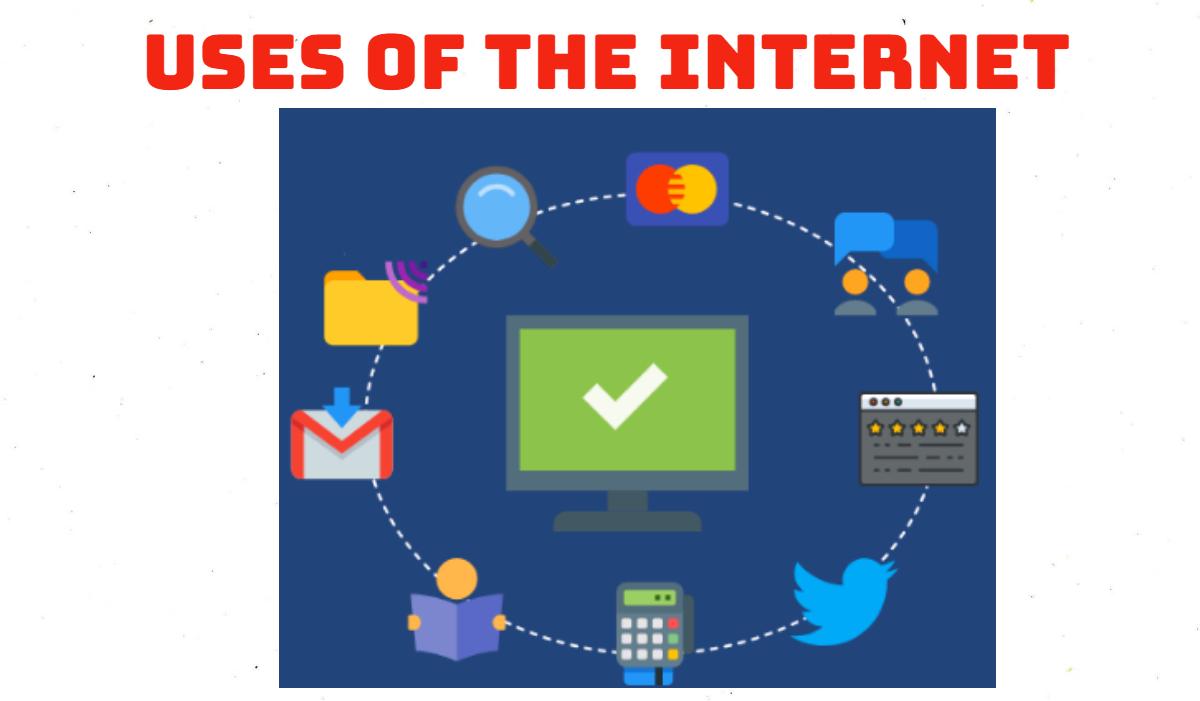
Uses of the Internet
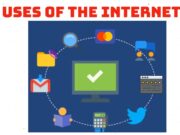
(1) E-mail (Electronic mail): E-mail refers to the transmission of messages across computer network in electronic form. Using e-mail, you can exchange text messages, pictures, sound, etc. with other Internet users across the world in just a few seconds.
(2) Newsgroups: There are a number of newsgroups on the Internet. These are used to exchange views, ideas, news and other information. An Internet user can directly participate in discussions on different topics. A user can also post his message on the board and other Newsgroup participants can read it and also post their replies.
(3) On-line chatting and conferences: Internet users across the world can communicate ‘thve with one another. Initially, users could exchange only text messages, but now it is possible to send voice, Images and sound. There are special soft wares to have audio/video conferences on the Internet.
(4) File Transfer Protocol (FTP): One of the most common methods of getting information from the Internet is FTP. Using the FTP, a user can copy files from a remote computer to his computer. This process is called downloading. The remote computer from which you are copying a file or to which you are sending a file is called the FTP server. A client computer can also send a file to the FTP server. This is called uploading.
(5) World Wide Web (WWW): It is a collection of all Web sites on the Internet. All these Web sites are linked to one another to form a global (world-wide) ‘web’ of Information. In WWW, all the information is stored on computers called Web servers. The client makes use of a program called browser to access information on the WWW.
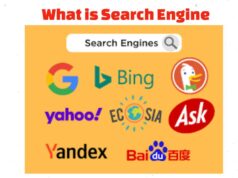
(6) Search Engines: A search engine is a program at a Web site on the WWW, with the help of which a user can search for other Web sites. The user types in the keyword or his question and searches the web for all the available information. Google, Alta Vista. Lycos are some of the popular search engines.
(7) Sharing resources for commerce and entertainment: An Internet user can do the following tasks:
(1) Buy and sell products through advertisements on the Internet.
(2) Manage bank accounts.
(3) Study a subject of one’s choice and obtain a degree.
(4) Read newspapers, magazines, etc.
(5) Watch movies, play games and listen to music.
(8) Streaming media: Many existing radio and television broadcasters such as the British Broadcasting Corporation (BBC) provide Internet ‘feeds’ of their audio and video streams. Some also allow ‘Preview’ and ‘Listen Again features.
(9) Voice over Internet Protocol (VoIP): This phenomenon began in 2000 as an optional two-way voice extension to some of the Instant Messaging systems. As It is the Internet which carries the actual voice traffic, VoIP can be free, or costs much less than a normal telephone call especially over long distances.